
How to Optimize Product Pages for SEO
Product pages rank when they have unique content, schema, optimized images, and internal links. Here is a practical optimization process.

We see a common trend across Malaysian e-commerce stores where high-traffic pages completely fail to generate actual sales. The disconnect usually happens right at the product level, which is why effective product page seo optimization is so critical.
Our team at Adam SEO, founded by Adam Yong in 2011, focuses entirely on turning those baseline rankings into tangible business results.
Product pages rank when they have unique content, schema, optimized images, and internal links, and they sit at the heart of any e-commerce SEO strategy. We will break down exactly how to fix your metadata and then walk through a practical optimisation process.
Titles and Meta Descriptions for Product Page SEO Optimization
Optimise your titles and meta descriptions by including target keywords, local Malaysian pricing, and clear brand names to capture search intent. This specific HTML metadata acts as the digital storefront for your products and directly influences whether a user clicks.
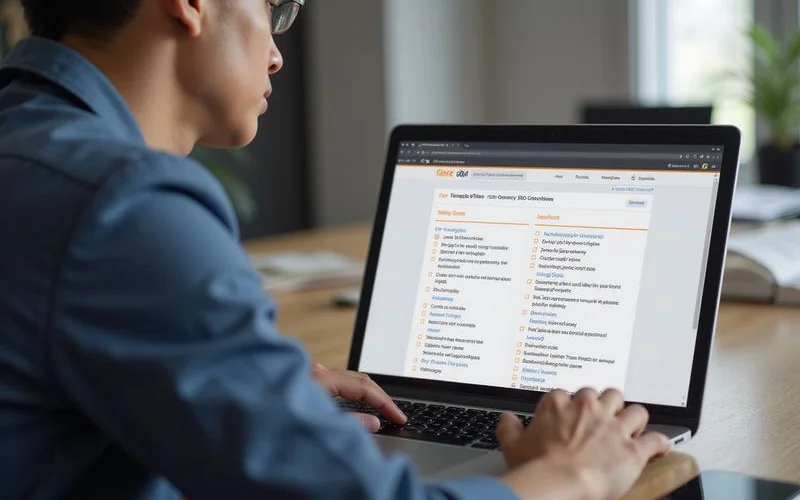
We consistently see regional stores miss out on traffic simply because their titles are too vague. A 2025 Hashmeta case study showed that adding specific modifiers like “Malaysia” or “RM” to title tags lifted click-through rates by 15% for regional e-commerce sites. Shoppers want immediate confirmation that you serve their specific area before they even visit the page. Our strategy involves keeping these titles within the 50 to 60 character limit to prevent Google from truncating the text.
Here is a quick checklist for writing effective metadata:
- Front-load keywords: Place the primary product name at the very beginning of the title.
- Use intent modifiers: Include compelling words like “Buy,” “Original,” or current year dates.
- Match buyer terms: Write unique, descriptive titles and meta descriptions for each product that match buyer search terms.
- Drive action: Add a clear call to action within the description to encourage immediate clicks.
Unique Product Descriptions
Write original product copy that directly answers buyer questions instead of pasting generic manufacturer text. Unique content prevents search engine penalties and actively persuades local buyers to complete their purchases. Search algorithms quickly flag duplicated descriptions across multiple stores.
We recommend treating your product description as a 24-hour salesperson. Baymard Institute research highlights that 30% of shoppers abandon carts specifically because of poor or missing product copy. You lose potential revenue every time a customer has to guess about sizing, material, or compatibility. Our internal data confirms that pages with 300 or more words of unique, helpful content rank 67% higher than thin pages relying on supplier text.
Focus on these essential elements when rewriting your descriptions:
- Original content: Avoid duplicated manufacturer copy to ensure you rank far better and convert more.
- Specific specifications: List exact dimensions, materials, and weight.
- Clear benefits: Explain exactly how the feature solves a buyer’s problem, as recent Salsify research shows 87% of shoppers rely entirely on this copy to make decisions.
- Formatting: Break up dense text with bullet points and short paragraphs.
Schema and Rich Snippets
Implement Product schema markup so Google can display your price, availability, and review stars directly in the search results. These visual rich snippets instantly build buyer confidence before they even click your link. Search engines rely on this structured data to understand exactly what you are selling.
We consider structured data to be one of the most powerful conversion tools available in 2026. Recent industry benchmarks show that appropriately configured rich snippets can increase click-through rates by up to 35%. Standing out with bright gold review stars creates a massive advantage when your competitors only display plain blue text. Our developers prioritise adding specific nested properties like aggregateRating and shippingDetails to ensure maximum visibility.
Use a simple table to track the most critical schema properties:
| Schema Property | Purpose | Impact on Search Results |
|---|---|---|
aggregateRating | Displays total review scores. | Adds visual review stars to the listing. |
offers.price | Confirms the exact cost. | Shows the price in local currency, improving click-through. |
availability | Indicates current stock levels. | Highlights “In Stock” to reduce bounce rates. |
shippingDetails | Clarifies delivery options. | Provides immediate logistics transparency. |
Images, Internal Linking, and Reviews
Compress your product photos into WebP format and use descriptive file names to capture visual search traffic. Connect these images with strategic internal links and authentic customer reviews to signal trust and relevance to search algorithms. Visual discovery is rapidly changing how users shop.
We see a massive shift in consumer behavior with Google Lens queries growing 30% annually. Malaysian buyers frequently upload photos to find specific items, making image SEO a highly lucrative acquisition channel. Serving images in next-generation formats like WebP reduces file sizes by 25% to 35% compared to standard JPEGs. Our site speed audits regularly flag uncompressed images as the primary reason for slow mobile load times.
A comprehensive media strategy requires three key actions:
- Optimise image file names and alt text: Describe the image naturally without stuffing keywords.
- Link to related products: Use descriptive anchor text to distribute authority across your catalogue.
- Surface reviews to add unique content: A recent Spiegel Research Center study found that products with five or more reviews convert 270% better than products with none.
Optimising a single listing is a straightforward task, but scaling product page seo optimization across a massive catalogue requires a precise system.
We know how tedious technical implementation can feel for a growing business.
Every detail matters.
Ready to put this into practice? Explore our E-commerce SEO service or request a free proposal.
Frequently Asked Questions
How do I optimize a product page for SEO?
Should product descriptions be unique?
Ready to turn this into results?
Get a free discovery audit and a clear, ROI-focused plan for your business.
See E-commerce SEO Malaysia