
Core Web Vitals: How Site Speed Affects Rankings
Core Web Vitals (LCP, CLS, INP) are ranking signals that also affect bounce rate and conversions. Here is how to measure and improve them.

You already know that site speed matters for your search rankings.
Adam Yong founded Adam SEO in 2011 on the exact principle that raw traffic means nothing if visitors leave before buying. We see Malaysian SMEs constantly lose sales because their websites fail the current performance tests. Understanding core web vitals seo is critical right now.
Our team will show you how to measure these signals and implement fixes that actually work. The data proves that faster load times create a better user experience and drive more conversions.
LCP, CLS, and INP Explained
Largest Contentful Paint measures loading speed, Cumulative Layout Shift tracks visual stability, and Interaction to Next Paint measures responsiveness. These three specific metrics determine whether Google considers your page experience fast enough for users.
We track these metrics closely because Google tightened its standards significantly in 2026. A recent update replaced the old First Input Delay metric with INP. This change means your site must respond to a user’s click in under 200 milliseconds.
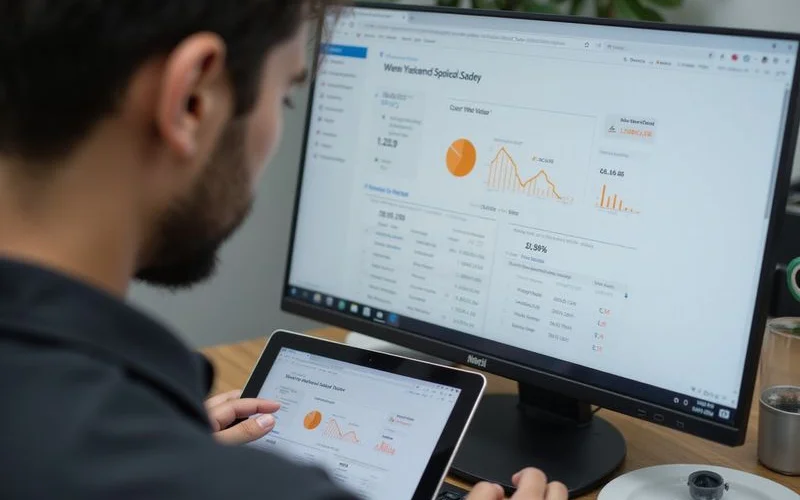
Many local e-commerce stores fail the LCP test because of massive promotional banners. Our audits show that the main content must load within 2.5 seconds to pass this check. Anything slower pushes you into the “Needs Improvement” category.
Visual stability is just as important for mobile shoppers. We regularly see high CLS scores when late-loading ads push content down the screen. A passing CLS score must stay below 0.1 to avoid frustrating your visitors.
Here are the exact 2026 targets you must hit:
- LCP (Loading): Under 2.5 seconds.
- INP (Interactivity): Under 200 milliseconds.
- CLS (Stability): Less than 0.1.
Common Fixes
Optimise and compress images, reduce render-blocking scripts, improve server response time, and reserve space for elements to avoid layout shifts. These actions directly target the code slowing down your pages.
Our development team fixes dozens of sluggish websites every month across Malaysia. Heavy image files are almost always the biggest culprit behind poor LCP scores. Converting old JPEG files into the modern WebP format often cuts file sizes in half.
Another major issue is the use of heavy third-party plugins. We find that local stores using bulky chat widgets or multiple payment gateways like Billplz often suffer from terrible INP scores. Loading these scripts synchronously forces the browser to freeze.
You can fix this by deferring non-essential scripts until after the main content loads. Our preferred method is to use a content delivery network. A CDN like Cloudflare, which has local servers right in Kuala Lumpur, drastically improves your server response time for regional visitors, and the underlying impact of hosting on speed and SEO often decides how far these gains can go.
Here are the most effective technical adjustments to make:
- Compress Images: Serve hero banners in WebP format.
- Delay Scripts: Defer analytics and chat widgets until user interaction.
- Reserve Space: Set fixed dimensions for images to stop layout shifts.
- Upgrade Caching: Use tools like WP Rocket to serve static HTML instantly.
The Bounce-Rate Link
Slow, unstable pages frustrate visitors and increase bounce rates. This hurts both your search rankings and your direct sales conversions.
We know that patience is non-existent for modern mobile shoppers. Recent 2026 data shows that a page load delay of just one to three seconds increases the probability of a bounce by 32 percent. A sluggish website actively drives customers to your faster competitors.
Google Analytics 4 now measures an “Engagement Rate” rather than the classic bounce metric. Our analytics experts explain that GA4 counts any session under 10 seconds without a secondary action as a bounce. You need your site to load instantly to secure that initial user engagement.
A recent Shopify study analysing 2026 e-commerce data confirmed this direct financial link. We saw clear evidence that stores keeping their INP under 200 milliseconds experienced significantly higher conversion rates. Speed is a revenue strategy rather than just an IT problem.
Avoid these common mistakes that drive up bounce rates:
- Ignoring Mobile Speed: Desktop scores are useless if your mobile site is slow.
- Cluttered Above-the-Fold Content: Too many elements overwhelm the initial load.
- Hidden Navigation: Users will leave if they cannot immediately find your menu.
Measurement Tools
Use PageSpeed Insights, Search Console, and field data to measure real-world performance. These platforms highlight the exact errors you need to correct.
We rely heavily on Google Search Console to monitor long-term trends. The “Core Web Vitals” report inside GSC uses actual Chrome User Experience Report data to show how real visitors experience your site. This field data is the exact information Google uses for its ranking algorithms.
For quick testing, PageSpeed Insights is the industry standard. Our technical team uses the lab data in PSI to isolate specific scripts or images that need compression. A common mistake is only looking at the desktop tab inside this tool.
Malaysian traffic is overwhelmingly mobile-first. We always instruct clients to prioritise their mobile performance scores over their desktop numbers. A 90 on desktop means nothing if your mobile score is stuck in the red.
Here is a quick comparison of the two main testing environments:
| Measurement Type | Data Source | Best Used For |
|---|---|---|
| Field Data | Chrome User Experience (CrUX) | Seeing what real users experience. |
| Lab Data | Lighthouse via PageSpeed Insights | Finding exact code bottlenecks to fix. |
Are you ready to put this into practice and improve your core web vitals seo performance?
We know that technical optimisations can feel overwhelming for busy business owners. Explore our Technical SEO service or request a free proposal to get a detailed performance audit today.
Frequently Asked Questions
Do Core Web Vitals affect SEO rankings?
How do I improve Core Web Vitals?
Ready to turn this into results?
Get a free discovery audit and a clear, ROI-focused plan for your business.
See Technical SEO Audit Malaysia